From the Classroom to the Capital Markets: Students of the VŠE Won the Czech Round of the CFA Research Challenge
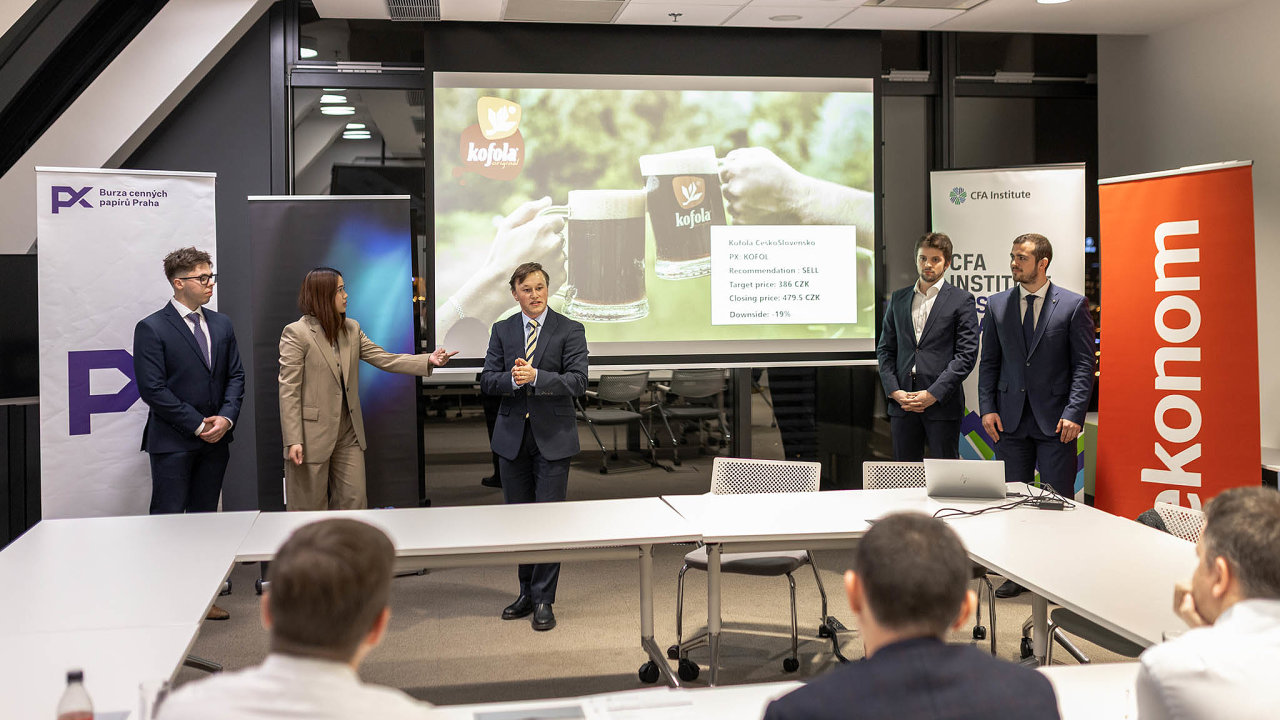
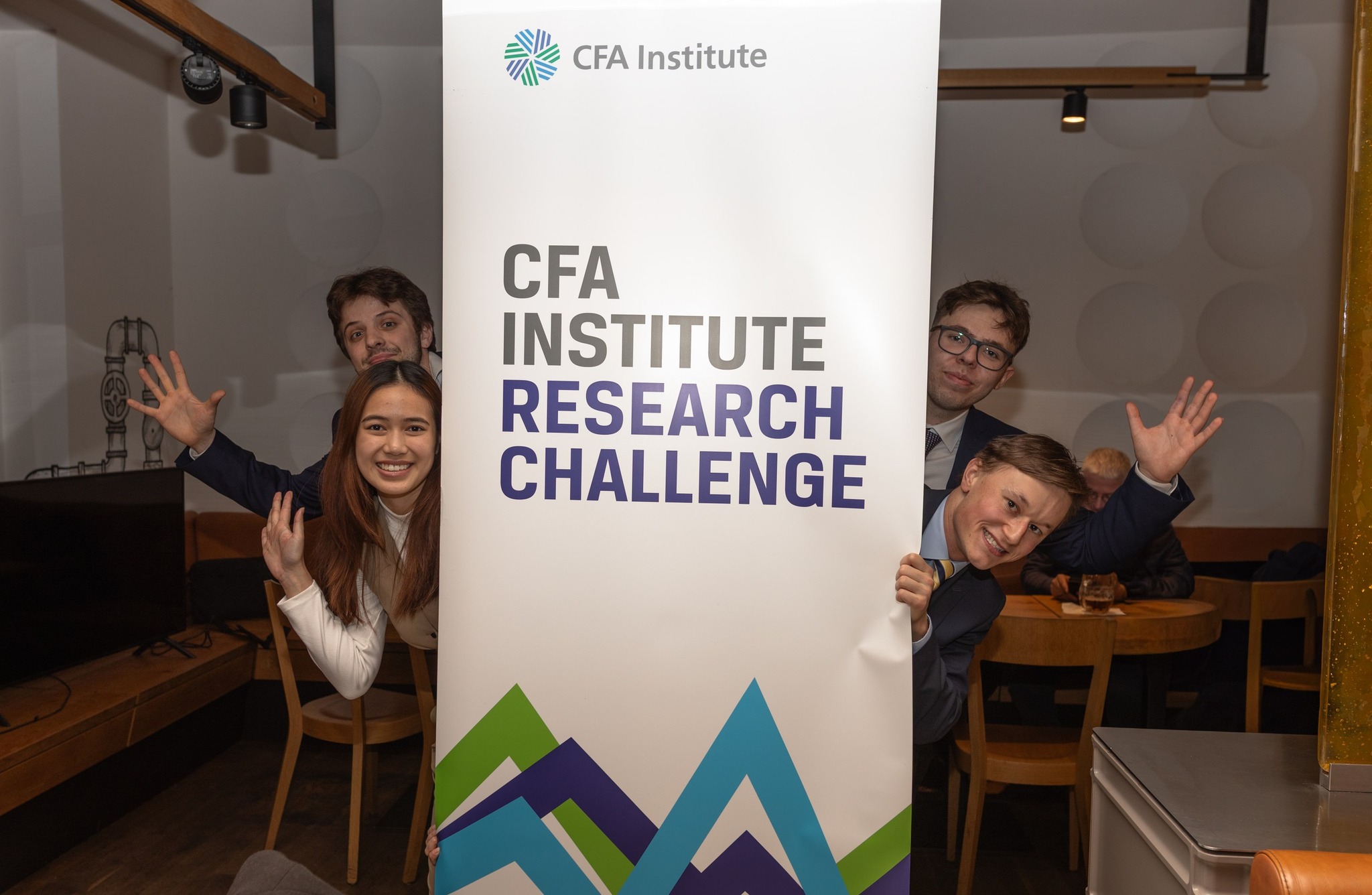
They built on last year’s triumph and once again confirmed that they belong among the very best. A team of students from the Prague University of Economics and Business won the national round of the prestigious CFA Institute Research Challenge 2025/2026, successfully defending their own investment analysis before a professional jury. The winning team – Hoai Linh Nguyen, Jan Strnad, Karel Plášek, Matúš Hadzega, and Maxim Mašín – under the guidance of mentor Bohumil Stádník, demonstrated outstanding analytical and presentation skills.
In the interview, Ms. Linh answers on behalf of the student team. How did they prepare for one of the most demanding student competitions in finance, what decided their victory, and with what ambitions are they heading into the international round?
What is the CFA Research Challenge about?
The CFA Research Challenge is a competition that simulates the work of an equity research analyst. All teams within the Czech Republic are assigned one selected company for which they prepare a comprehensive investment analysis. This involves an in-depth examination of the company’s market and competitive environment, understanding its business model, conducting financial analysis, valuing the company, identifying key risks, and ultimately formulating a clear investment recommendation.
How does the competition work?
At the beginning, a team must be formed and registered. The CFA Institute then provides all the necessary information, especially the schedule of individual rounds and the so-called subject company – the firm for which the investment analysis is prepared in the local round. We then begin the actual work, striving to fully understand the company’s story, its operations, and its key assumptions. Based on this, we develop our investment thesis and prepare a financial forecast and valuation.
The output of the first round is an equity research report written in accordance with CFA Institute rules but built on our own analyses and conclusions. Successful teams advance to the next round, where they prepare a presentation based on the report. This presentation is then defended before a professional CFA Institute jury, followed by a Q&A session. Based on these rounds, one team is selected to represent the Czech Republic in the international stages of the competition – first at the Eastern Europe level, then at the European level, and finally in the global round.
How are students supported?
Each team represents a specific university, and all members are students. The university appoints a faculty advisor or supervisor for each team, who acts as the main coordinator and assists both with expert guidance and work organization. At the same time, each team is assigned a mentor from the professional sphere through the CFA Institute, who provides practical feedback on the investment report, financial model, and presentation, and brings insights from real capital markets practice.
What was the most challenging part of the competition for you? What new skills did you gain?
At the beginning, the most challenging aspect was coordinating effectively and dividing the work properly. We were literally in completely different time zones – I was in China, one teammate was in Canada, and the others were in the Czech Republic – so aligning our schedules and establishing an effective system of collaboration took some time.
However, this challenge pushed us forward significantly. We learned how to delegate tasks more effectively, plan ahead, and rely on each team member to take responsibility for their part. Thanks to the competition, we also significantly improved our practical financial analysis skills, our work with financial models, and our ability to clearly and convincingly defend an investment opinion before a professional audience.
How are students selected for the competition, or how can they apply?
Teams are often formed by students themselves, usually before the start of the semester. Since each team represents one university, the number of teams per school is typically limited to one or two. If a student does not have a team, that is not a problem. For example, at the Prague University of Economics and Business, students can contact the CFA Research Challenge coordinators (Tanweer Ali from FPH or Bohumil Stádník from FFÚ), who can help assemble a team from students interested in participating but not yet part of a team.
Is the competition related to research in the field of finance?
Indirectly, yes. It is not scientific research in the sense of academic publication, but during the competition we work with similar principles—data analysis, hypothesis formulation, testing assumptions, and learning to argue in a structured way based on numbers. Methods rooted in economic theory and financial modeling are applied, with the outcome being a practical investment recommendation. A strong emphasis is also placed on a deep understanding of financial statements and how a company operates, which requires detailed study of available information and data.